Ugandan opposition presidential candidate Bobi Wine was forcibly removed from his home by military forces and taken to an unknown location, his party has said, deepening political uncertainty as votes continue to be tallied following the country’s tense election.
Officials from the National Unity Platform, Bobi Wine’s party, said armed security personnel cut power to his residence, breached the perimeter, and compelled him onto a military helicopter. The incident reportedly occurred hours after the opposition leader publicly accused authorities of widespread electoral malpractice, including ballot stuffing.
The reported abduction has triggered alarm among supporters and rights advocates, who say it signals a sharp escalation in state pressure on opposition figures. At the time of the incident, preliminary results released by the Electoral Commission showed President Yoweri Museveni maintaining a significant lead, extending his long grip on power.
Bobi Wine, a former pop star turned politician, has emerged as the most prominent challenger to Museveni’s rule, particularly among young voters. His political rise has been marked by repeated clashes with security forces, arrests, and allegations of abuse. He has previously said he was tortured while in custody, claims the government has denied.
Earlier on Friday, Wine stated that security forces had surrounded his compound, effectively placing him under house arrest. He also accused the authorities of using lethal force against his supporters during the election period, allegations that have heightened tensions nationwide.
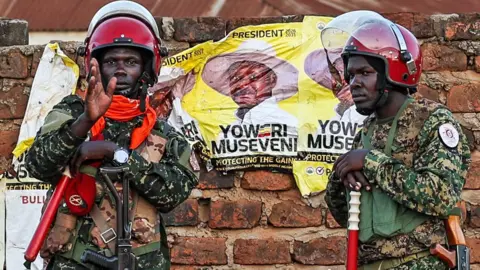
President Museveni, one of Africa’s longest-serving leaders, has governed Uganda since the mid-1980s. Over the years, critics say his administration has dismantled constitutional safeguards, including presidential term and age limits, while relying on security agencies to suppress dissent. The government maintains that its actions are necessary to preserve stability and public order.
The election period has been marked by violence and restrictions. International rights groups reported the use of tear gas, mass arrests, and alleged torture of opposition supporters during campaign rallies. In the days leading up to the vote, authorities also imposed a nationwide internet and mobile communications blackout, citing concerns over misinformation and security.
Election day itself was chaotic in several regions. Voters waited for hours as biometric verification systems failed, forcing officials to rely on manual voter registers. Opposition parties say these disruptions disproportionately affected their supporters and undermined confidence in the process.
As the vote count continues, the fate and whereabouts of Bobi Wine remain unclear. While official results are still pending, the unfolding events have intensified concerns about Uganda’s democratic trajectory and the shrinking space for political opposition.