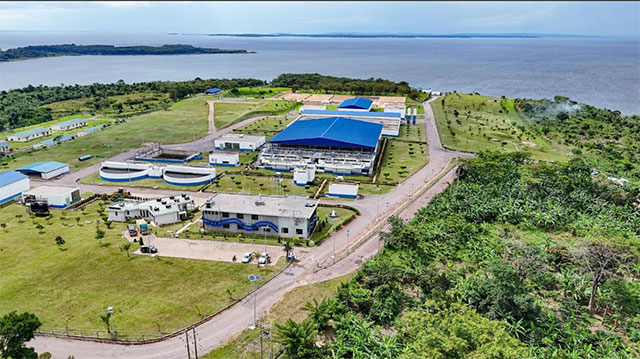
Millions of residents in northern and western Kampala are poised for more reliable water supply. The National Water and Sewerage Corporation is accelerating a major network expansion. This Katosi expansion connects the water treatment plant to the city’s fast-growing suburbs. Financing comes from the Agence Française de Développement.
The project forms part of wider rehabilitation efforts. It specifically includes restructuring and extension of the Greater Kampala Metropolitan Area water network. The primary goal involves stabilizing supply across what NWSC calls Kampala Water City. Moreover, officials aim to address chronic bottlenecks that have kept the plant operating at half capacity.
French Ambassador to Uganda Virginie Leroy toured the project last week. She described the €480 million French-funded Package 2B as a strategic investment. Consequently, the Katosi expansion translates high production at the plant into reliable access for consumers. Leroy highlighted the project’s dual focus on infrastructure efficiency and social inclusion.
Kampala is growing rapidly, Leroy stated during her visit. Therefore, ensuring water production meets demand is not just an engineering challenge. It is fundamentally a social and economic imperative for the city’s future. She also noted the project integrates a pro-poor component co-financed with KfW. This has already delivered 1,400 prepaid public standpipes. Additionally, sixty-four sanitation facilities now serve about 450,000 residents in informal settlements.
Current Production Capacity Challenges
The Katosi plant has a maximum production capacity of 160 million litres daily. However, it currently operates at around 52 percent due to constraints. Transmission and distribution limitations create these operational challenges. Plant manager Joseph Tweheyo Baine provided these figures during the ambassador’s visit.
As a result, the ongoing Katosi expansion aims to eliminate these bottlenecks. Construction of new reservoirs and extended pipelines will reach high-demand areas. This infrastructure development represents a critical step toward full capacity utilization. Engineers expect the upgrades to finally unlock the plant’s potential.
Infrastructure Components
The infrastructure plan includes 70 kilometres of primary transmission pipelines. Three major reservoirs are under construction at strategic locations. These include Kanyanya, Kabulengwa and Mutungo hills. Reservoir capacities range from one million litres to ten million litres. Subsequently, these structures are designed to improve pressure management across the network. They will balance supply and enhance resilience throughout the metropolitan area.
At Kanyanya Hill, excavation for a 10 million-litre reservoir is complete. Meanwhile, Mutungo Hill is seeing foundation works for a one million-litre elevated steel tank. Excavation at Kabulengwa Hill is set to begin in February. Workers will construct a 2.5 million-litre reinforced concrete reservoir at that location.
Pipeline Installation Progress
Pipe-laying is currently underway along the Mpererwe–Kawempe–Nansana corridor. Completion of the entire project is targeted for July 2027. In addition, a low-level bulk transmission line serving Kiira–Kasangati is scheduled for December 2026. This line will extend supply to Namugongo, Buwaate, Bulindo and Mulawa. Surrounding communities will also benefit from the expanded network.
NWSC Operational Growth
For NWSC, the project represents both operational and financial milestones. Since 2013, under Managing Director Eng. Dr. Silver Mugisha, the utility has expanded significantly. It has grown from serving 23 towns to 287 nationwide. Furthermore, its asset base has expanded from Shs650 billion to roughly Shs5 trillion.
The corporation now serves over one million active water connections. This reaches an estimated 22 million people across Uganda. Under its 2024–2027 Corporate Plan, NWSC aims to increase connections further. The goal involves reaching 1.1 million connections and extending services. This would bring reliable water to 24 million Ugandans.
Missing Link in Water Delivery
Alex Gisagara, NWSC senior adviser for engineering services, called the expansion the missing link. Specifically, the Katosi expansion translates production capacity into tangible benefits for households. It is not enough to generate water at the plant, Gisagara explained. Without transmission and storage infrastructure, production does not equate to supply. This reality has consequently driven the focus on network development alongside treatment capacity.
International Development Finance
The French-backed expansion reflects broader trends in development finance. AFD approved additional funds in December 2025. This followed the effective use of initial financing for the project. As a result, the new funds will increase Katosi’s production by 80,000 cubic metres daily. The network will also extend by 50 kilometres under this expanded program.
Partner Organizations
The programme also receives backing from the European Union. Similarly, the European Investment Bank is participating in funding arrangements. This illustrates the role of blended finance in addressing infrastructure gaps. Rapidly urbanizing African cities face significant challenges in water provision. Consequently, multiple development partners are coordinating efforts to support Uganda’s water sector.
Economic Impact
Analysts say the expansion is likely to have positive economic spillovers. Reliable water supply underpins industrial and residential development. It also reduces public health risks associated with inadequate water access. Furthermore, the project enhances investor confidence in Kampala’s property and business environment. It simultaneously reduces pressure on informal water vendors. These vendors often charge high rates for inconsistent supply.
Ongoing Water Challenges
Uganda faces ongoing challenges in water provision across the country. Rapid urbanisation continues to strain existing networks in major cities. Population growth increases demand faster than infrastructure can expand. Moreover, climate variability has introduced new uncertainties in water resource management. These factors have led to intermittent supply in some areas of Kampala.
By unlocking Katosi’s full capacity, the expansion could provide more predictable service. Specifically, the project helps meet demand in key suburban hubs. These include Kira, Kasangati, Gayaza, Matugga and Kawempe. Nansana and Wakiso will also benefit from improved water delivery. Residents in these areas have experienced unreliable supply for years.
Service Area Benefits
The expanded network will transform water access across multiple districts. Kira Municipality stands to gain significantly from the upgraded infrastructure. Kasangati town will receive enhanced supply through the new transmission line. Gayaza residents currently face intermittent service during peak demand periods. The Katosi expansion directly addresses these reliability concerns for growing communities.
Matugga traders have long complained about inadequate water for commercial activities. Kawempe industries require consistent supply for manufacturing operations. Nansana households currently rely on expensive water vendors during shortages. Wakiso institutions need reliable water for schools and health facilities. The project therefore delivers solutions to diverse user groups across the metropolitan area.
Strategic Importance for Kampala
Completion of the Katosi upgrade is expected to stabilize supply by the end of the decade. Ultimately, the project delivers a strategic boost to Kampala’s water infrastructure. It represents one of the largest investments in the city’s water network in recent years. The Katosi expansion addresses both immediate needs and long-term planning requirements.
French Ambassador Leroy emphasized the importance of the partnership during her tour. She noted that France remains committed to supporting Uganda’s development priorities. Water infrastructure stands as a fundamental requirement for economic growth. The project demonstrates how international cooperation can address critical urban challenges.
Future Outlook
NWSC continues to work with development partners to expand access across the country. The Katosi expansion moves the utility closer to its goal of universal service coverage. Consequently, millions of Ugandans will gain access to reliable water services. The project sets a precedent for future infrastructure development partnerships.