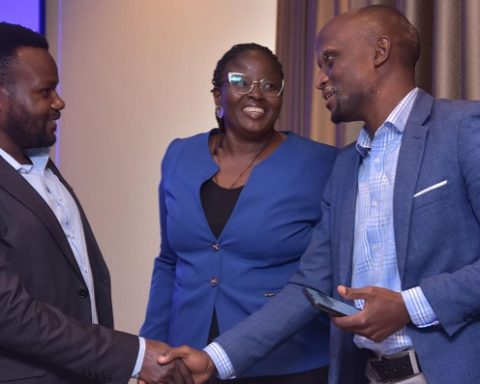
The NRM Lira District chairperson election has become the center of intense political drama. Security forces surround the Itek Sub-county headquarters in Lira District. Consequently, this high-profile contest between incumbent Lira District Woman MP Linda Agnes Auma and former Minister Sam Engola has exposed deep divisions within the ruling National Resistance Movement party structures.
Linda Agnes Auma currently serves as the district’s Woman MP. Moreover, she commands significant support among youth and women delegates. Therefore, her grassroots influence has been instrumental in mobilizing various constituency groups throughout northern Uganda. Sam Engola brings decades of political experience to the table. Furthermore, the veteran party stalwart and former Minister of State for Housing has long-standing relationships within the party hierarchy. Nevertheless, his traditional support base makes him a formidable opponent in this crucial NRM Lira District chairperson election.
The current NRM Lira District chairperson election has been plagued by controversy from the outset. Party officials initially scheduled the voting process for May 23. However, Engola’s supporters stormed the venue. As a result, these demonstrators chanted “No vote! No vote!” while alleging systematic unfair treatment. Additionally, they claimed their delegates had been prevented from participating in the democratic process.
A second attempt on May 27 met with similar disruption. In fact, tensions escalated and security concerns mounted. Furthermore, the repeated postponements have raised serious questions about the party’s internal governance mechanisms. More importantly, these delays challenge the organization’s ability to conduct fair elections at the district level.
Both candidates have leveled serious accusations against each other. Specifically, Auma’s camp has accused Engola of attempting to hijack the electoral process. They claim he uses intimidation tactics and manipulates local party registers. Consequently, these allegations suggest a systematic effort to undermine the legitimacy of the voting procedure.
Engola maintains that the NRM Lira District chairperson election has been deliberately skewed in Auma’s favor. His supporters cite irregularities in delegate accreditation processes. Additionally, they claim government vehicles transported Auma’s supporters to polling locations. This allegedly constitutes a misuse of public resources. However, these accusations remain under investigation.
Security operatives from the Uganda Police Force have established a comprehensive cordon. Other agencies have also deployed personnel around the Itek Sub-county headquarters. Therefore, this heavy security deployment aims to prevent further disruptions. Moreover, these measures ensure that today’s NRM Lira District chairperson election proceeds without incident.
Party officials have indicated that the election will proceed today. Nevertheless, many have declined to speak on record. They state the voting process will continue “with or without consensus” between the rival factions. Consequently, this determination reflects the party leadership’s commitment to resolving internal disputes. The organization remains dedicated to democratic processes despite obvious challenges.
The outcome of this NRM Lira District chairperson election carries significant weight beyond local party politics. With the 2026 general elections approaching, both Auma and Engola are key mobilizers for the NRM. Furthermore, their influence extends to various constituencies throughout northern Uganda. Therefore, their impact could affect voter turnout and electoral outcomes in the broader region.
This election also serves as a test case for the party’s ability to manage internal conflicts. However, the organization must maintain democratic principles while handling these disputes. How the NRM handles this contentious NRM Lira District chairperson election may set precedents. More importantly, these precedents will influence how similar disputes are handled in other districts.
Political observers have expressed concern about the repeated disruptions. These incidents highlight potential weaknesses in the party’s electoral infrastructure. Additionally, they raise questions about the effectiveness of current conflict resolution mechanisms. Local community leaders have called for calm. They urge both factions to respect the democratic process. Their appeals emphasize that the legitimacy of whoever emerges as the new district chairperson will depend largely on the perceived fairness of today’s NRM Lira District chairperson election.
As Uganda approaches the critical 2026 general elections, this dispute becomes increasingly important. The winner will need to unite the divided party structures. Additionally, they must build a cohesive organization capable of effective political mobilization. Regardless of today’s outcome, this contentious electoral process has revealed the need for stronger institutional frameworks. These frameworks must manage internal party conflicts effectively.
The lessons learned from the NRM Lira District chairperson election will likely influence how similar disputes are handled. Consequently, this contentious electoral process has revealed the need for stronger institutional frameworks. These frameworks must manage internal party conflicts effectively. The international community continues to monitor developments closely. Transparent democratic processes within political parties contribute to broader governance standards. Therefore, the successful conclusion of today’s NRM Lira District chairperson election would represent a positive step. This step would strengthen democratic institutions in Uganda’s political landscape.
READ: One Shot Dead, UPDF Soldier Stoned into Coma on Morning of NRM Primaries