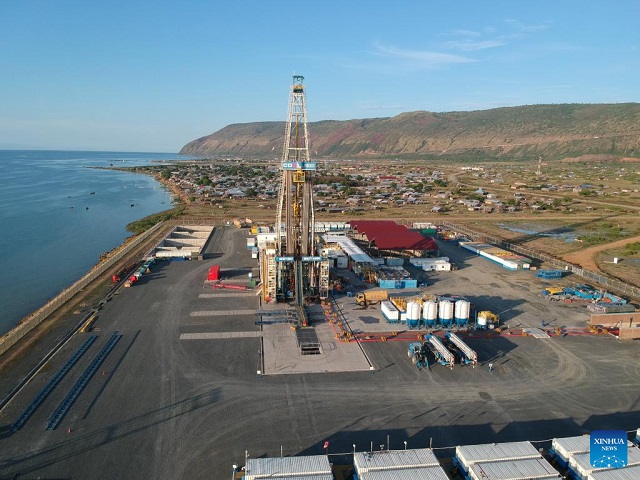
Uganda’s anticipated June and July oil production timeline is facing significant uncertainty. Critical emergency preparedness infrastructure has experienced substantial delays. According to a new government audit, the oil spill plan behind schedule poses serious risks to first oil targets. Despite assurances from government and oil companies, a key safety system remains incomplete.
Progress on the National Oil Spill Response and Monitoring Infrastructure Project has stalled. This initiative is meant to strengthen the country’s preparedness for oil spill emergencies. However, inadequate funding has prevented timely implementation. The 2025 report by the Office of the Auditor General reveals severe budget shortfalls. Only UGX 1.2 billion has been released out of the required UGX 59.9 billion. This covers the period between financial years 2022/23 and 2024/25.
Auditor General Edward Akol warned that failure to achieve critical project milestones is problematic. This directly threatens the 2026 First Oil target. Furthermore, the absence of a functional emergency response capability exposes the country to environmental dangers. Uganda’s oil wells are located near water bodies. Therefore, spill prevention becomes absolutely crucial for protecting these ecosystems.
Pipeline Route Raises Concerns
The export pipeline adds another layer of complexity to safety requirements. Though largely buried, it will stretch approximately 1,440 kilometres across diverse terrain. The route passes through inhabited communities, farmland, and grazing areas. It also crosses protected ecosystems that require special consideration. Consequently, a comprehensive oil spill plan behind schedule leaves these areas vulnerable.
The sector is regulated by the Petroleum Authority of Uganda. PAU oversees developments alongside the Ministry of Energy and Mineral Development. The authority states it will continue engaging with finance and energy ministries. Their goal involves securing necessary funding for the delayed project. However, time is running short before production is scheduled to begin.
Production Targets and Progress
Several milestones are required to meet the 2026 production target. Readiness of the Tilenga and Kingfisher fields remains essential. The East African Crude Oil Pipeline must also be completed. A review of monitoring reports from June 2025 showed concerning trends. Overall completion rates were lagging behind planned targets across all projects.
Tilenga field stood at 57 percent completion against a planned 73.2 percent. Kingfisher reached 69.6 percent compared to the 73.2 percent target. EACOP achieved 62.5 percent against a planned 72 percent. These figures demonstrated that the oil spill plan behind schedule was not an isolated issue. However, by November 2025, progress had shown some improvement across the board.
Recent Progress Updates
Tilenga field completion improved to 60 percent by November. Kingfisher reached 74 percent, with all wells for first oil already drilled. The export pipeline achieved 75 percent completion during the same period. Management attributed these gains to specific remedial measures. Pre-commissioning tests helped verify system functionality. Increased work shifts accelerated construction activities. Additionally, an inter-ministerial committee was established to fast-track implementation.
CNOOC reported in September 2025 that its Kingfisher project was 95 percent complete. All stimulations were finished and the project remained on track for production. The company also indicated readiness through an Oil Spill Contingency Plan. This plan aims to protect water quality in the Albertine region. It also addresses biodiversity concerns in ecologically sensitive areas.
Auditor General Warning
Despite operator-level preparations, the Auditor General emphasized urgent funding needs. Critical infrastructure requires immediate financial support. The Real-Time Monitoring Centre remains underfunded and incomplete. Similarly, the Disaster Recovery System cannot function without additional resources. The oil spill plan behind schedule encompasses these essential components.
Although the project received UGX 446 million in the 2024/25 financial year, this proved insufficient. The funds were fully utilized for available activities. However, only five out of ten planned surveillance tool sets were procured. This leaves significant gaps in monitoring capability. Some progress has been recorded in other areas despite constraints. Disaster recovery planning has advanced to some extent. Oil spill drills have been conducted periodically. An Oil Spill Equipment Hub is developing through the Oil Spill Mutual Aid Group.
Funding Projections
The Ministry of Finance has proposed maintaining the project budget at UGX 446 million this financial year. Projections show increases to UGX 2 billion annually in 2026/27 and 2027/28. However, experts question whether this pace matches the urgency of the situation. First oil is expected by mid-year, with revenues anticipated by year-end or 2027. The gap between production start and full response capability remains concerning.
Environmental Risks
Experts warn that without a fully functional spill response system, consequences could be severe. Potential oil leaks might contaminate drinking water sources across the region. Fisheries that support local livelihoods could suffer significant damage. Tourism operations in scenic areas might face disruption and reputational harm. Fragile ecosystems could experience degradation that takes decades to reverse.
The Albertine Graben is known for its exceptional biodiversity. It hosts numerous species found nowhere else on earth. Therefore, an oil spill plan behind schedule carries implications beyond regulatory compliance. It affects conservation values of international significance. Local communities depend on natural resources for their daily survival. Their water sources require protection from industrial accidents.
Regulatory Response
PAU acknowledges the funding gaps and their implications. The authority continues engaging with Ministry of Finance officials. They emphasize that emergency preparedness cannot be compromised for production timelines. The oil spill plan behind schedule must receive priority attention. Otherwise, Uganda risks proceeding with production while lacking adequate safeguards.
The Ministry of Energy and Mineral Development also faces pressure to address the issue. As the oversight body for sector development, they carry responsibility for safety systems. Coordinated action between ministries remains essential for securing additional funds. The Auditor General’s report provides official documentation of the shortfall. This strengthens the case for releasing the required UGX 59.9 billion.
Industry Perspective
Oil companies operating in Uganda have developed their own contingency plans. CNOOC’s Oil Spill Contingency Plan represents one such initiative. TotalEnergies and other partners have also prepared response measures. However, these company-level plans cannot fully substitute for national infrastructure. The Real-Time Monitoring Centre requires government leadership and funding. Coordination between company and government systems depends on complete infrastructure.
The oil spill plan behind schedule affects this coordination capability. Without full monitoring and disaster recovery systems, response times may suffer. Early detection of leaks becomes more difficult without complete surveillance coverage. These gaps increase overall risk for all stakeholders involved.
Community Concerns
Residents along the pipeline route have expressed anxiety about safety. Farming communities worry about potential contamination of their land. Fishing villages depend on clean water for their livelihood and health. The oil spill plan behind schedule provides little reassurance to these populations. They question whether production should proceed before full safeguards exist.
Local government officials have also raised concerns. They would bear responsibility for managing any spill impacts. Without adequate national systems, local capacity would be overwhelmed. This creates potential for catastrophic consequences reaching far beyond the immediate spill site.
Timeline Pressure
The gap between project completion and production start creates significant pressure. First oil targets have been delayed multiple times over past years. Further postponements would disappoint expectations built around revenue projections. However, proceeding without complete safety infrastructure carries different risks. The oil spill plan behind schedule forces difficult choices between timelines and safety.
Auditor General Akol’s report provides official documentation of these challenges. It recommends urgent funding releases to address identified gaps. Without such action, the 2026 First Oil target remains threatened. Environmental safety also hangs in the balance as production approaches. The coming months will determine whether Uganda achieves its production ambitions safely.