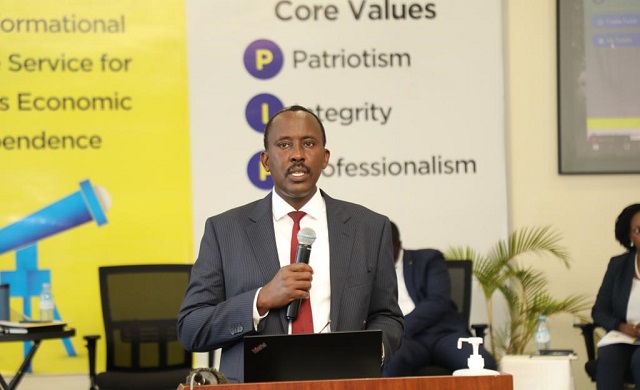
NAKAWA – In an ongoing effort to tackle corruption within its ranks, the Uganda Revenue Authority (URA) has introduced a lifestyle audit policy. This significant revelation came to light during a media engagement held at the URA headquarters in Kampala. Ibrahim Bbossa, the Assistant Commissioner of Public and Corporate at URA, shared that over the past three years, 63 URA staff members have been dismissed due to integrity-related issues, signaling the authority’s commitment to upholding ethical conduct within the organization.
The newly implemented lifestyle audit policy marks a departure from the standard procedures at URA. Bbossa explained that if any individual, whether a taxpayer or under investigation, faces allegations, their income, family earnings, and assets will be thoroughly scrutinized. The aim is to delve into the finer details and detect any irregularities that may indicate corrupt practices. The audacious move is expected to reshape behavior within the institution and particularly address issues of corruption, which have plagued the organization.
During the media engagement, Bbossa emphasized the significance of the fight against corruption, describing it as a major agenda for URA. He stated, “We are determined to eliminate revenue leakages within the organization, just as we strive to combat leakages in the wider society.” Bbossa further attributed the lack of tax compliance and subsequent low revenue collections in Uganda to the politicization of revenue collection. He emphasized that trust is the cornerstone of tax collection and highlighted the adverse impact of negative public perceptions and political statements targeting URA and its personnel, which can undermine compliance.
Moses Owino, the Manager for Enforcement in the Kampala Metropolitan Area at URA, shed light on the evolving methods of smuggling. While outright smuggling has seen a significant decrease, down to approximately 7%, there has been an alarming rise in misclassification, under-declaration, and under-valuation of goods in recent years. URA’s latest data reveals that importers’ under-declaration of goods stands at 43%, while misclassification accounts for 15% of cases.
To address these challenges, Owino outlined a comprehensive approach that includes engagement, education, and enforcement measures. URA aims to reduce revenue leakages by fostering compliance and raising awareness about the consequences of tax evasion.
In the current financial year, URA has already recorded 9,200 seizures, indicating its resolve to combat illicit activities. The authority has recovered a substantial sum of UGX 88.2 billion as of March 2023. To further enhance enforcement, URA has implemented a vehicle tracking system that monitors the movement of both dry and wet cargo entering, transiting, or leaving Uganda.
URA recently announced its tax collection figures for the 2022/2023 financial year, revealing a total of UGX 21.4 trillion collected thus far. With only two weeks remaining before the end of the fiscal year on June 30, URA aims to collect an additional UGX 2.4 trillion. Looking ahead, URA has set an ambitious revenue target of over UGX 29.3 trillion for the upcoming financial year, representing a significant increase of UGX 3.7 trillion compared to the current year’s target.
As URA takes bold steps to combat corruption and enhance revenue collection, the organization remains committed to fostering transparency, trust, and compliance among taxpayers and its own workforce. The implementation of the lifestyle audit policy demonstrates URA’s determination to build an environment of integrity and accountability within the tax body, setting a precedent for combating corruption in Uganda.
Would you like to get published on this Website? You can now email Uganda Times: an Opinion, any breaking news, Exposes, story ideas, human interest, articles, or any interesting videos: [email protected]. Or join the Ugandatimes WhatsApp Group or Telegram Channel for the latest updates