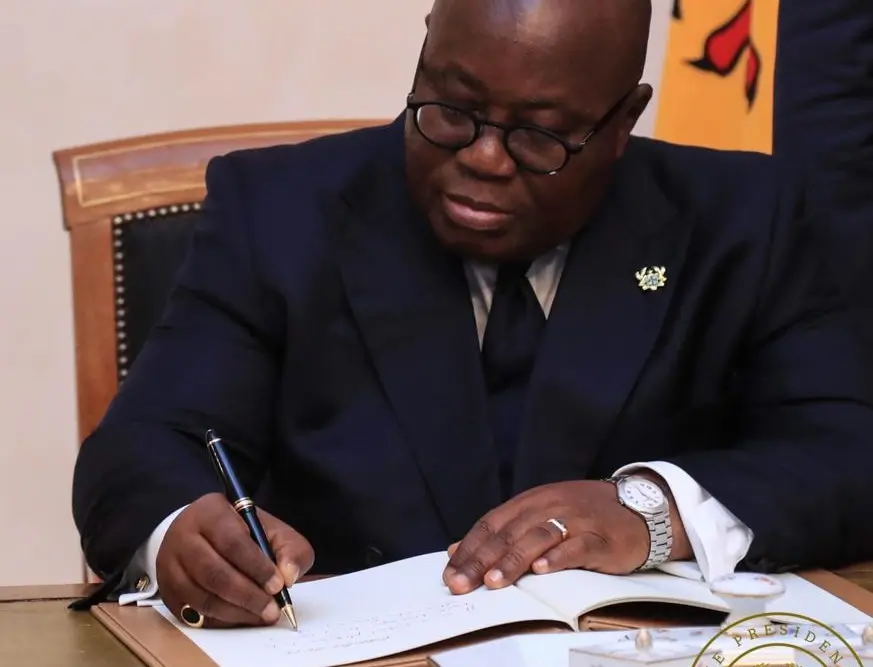
Ghana’s Parliament approved a bill on Wednesday that imposes jail terms on individuals who identify as L.G.B.T.Q. or engage in organizing gay advocacy groups. The legislation, among the harshest on the African continent, awaits President Nana Akufo-Addo’s signature to become law.
Under the proposed law, individuals convicted of identifying as gay could face up to three years in jail, while those involved in promoting L.G.B.T.Q. issues could be sentenced to five years.
Moreover, engaging in gay sex would carry a penalty of five years, an increase from the previous three years stipulated by earlier legislation.
This bill aligns with a broader trend of anti-L.G.B.T.Q. legislation sweeping across Africa. Countries such as Tanzania, Niger, and Namibia have recently enacted stricter laws, while Uganda’s anti-gay legislation, which includes the death penalty, remains in force.
Amnesty International has raised concerns about the legislation, highlighting that 31 countries in Africa already criminalize consensual same-sex activity. The organization warns of a surge in homophobic attitudes and rhetoric across the continent.
Linda Nduri, a campaign manager for Africa at the nonprofit organization All Out, noted the persistent stigma against L.G.B.T.Q. individuals in many African countries, where being L.G.B.T.Q. is often perceived as evil or un-African.
While both major political parties in Ghana support the bill, debates within Parliament have centered on its severity.
Alexander Afenyo-Markin, a member of the governing New Patriotic Party, proposed amendments to mitigate the bill’s harshness by suggesting alternatives to jail terms, such as counseling and community service. However, his proposals were met with opposition from colleagues advocating for strict penalties.
According to NewYork Times, the bill has garnered widespread public support and enjoys backing from religious and traditional leaders in Ghana. However, human rights organizations argue that it violates constitutional rights, including the right to equality and freedom from discrimination based on sex or gender.
Michael Akagbor, a senior program officer at the Center for Democratic Development, emphasized that legal challenges against the legislation are underway in Ghana’s Supreme Court. He expressed disbelief at the passage of such a bill in a democratic society like Ghana but remains hopeful that legal avenues will prevent its implementation.