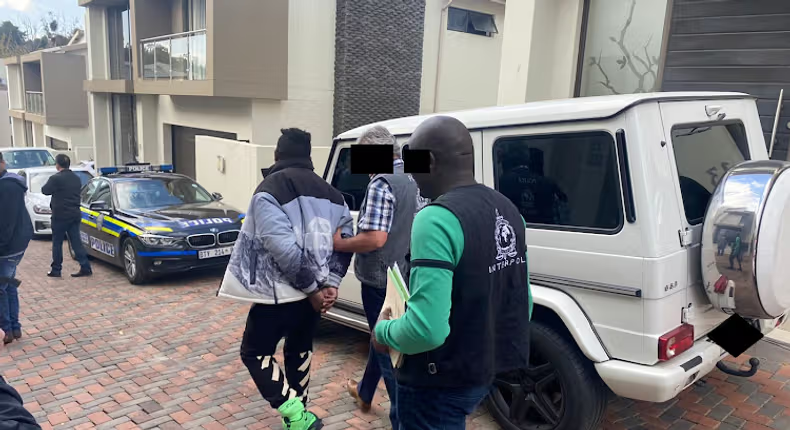
In a major African cybercrime crackdown, authorities across 14 nations arrested 260 suspects. Furthermore, they seized more than 1,200 electronic devices. The operation, led by Interpol, ran from July 28 to August 11, 2025. It specifically targeted transnational gangs behind romance scams and sextortion. Consequently, nearly USD 2.8 million in victim losses was uncovered.
The success of this effort stemmed from strong coordination. In particular, law enforcement worked closely with Interpol and cybersecurity experts. As a result, they gained access to critical digital intelligence. Investigators tracked IP addresses, fake social media profiles, and fraudulent domains. Moreover, they dismantled 81 cybercrime infrastructures. Evidence collected included USB drives, SIM cards, and forged documents.
Ghana led the regional response. Police there made 68 arrests and confiscated 835 devices. Additionally, they identified 108 victims who lost USD 450,000—though USD 70,000 was recovered. Many scams involved fake courier or customs fees. Others secretly recorded intimate videos for blackmail purposes.
Senegal also played a key role in the African cybercrime crackdown. Authorities arrested 22 suspects who impersonated celebrities online. For example, the group used dating apps to lure victims. They defrauded 120 people of about USD 34,000. Police seized 65 devices, fake IDs, and financial records.
Meanwhile, Côte d’Ivoire dismantled one of the largest sextortion rings. Officers arrested 24 suspects and identified 809 victims. Notably, criminals coerced individuals into sharing explicit content. They then used it to demand payments. This case underscores the psychological harm caused by such crimes.
Angola contributed as well. Eight suspects were arrested for using forged documents to create fake identities. Their victims included both locals and foreigners. Therefore, the operation highlighted how cybercrime in Africa often crosses borders.
Cyril Gout, Interpol’s Acting Executive Director of Police Services, emphasized the human toll. He stated that these crimes cause serious financial and emotional damage. Online platforms, he noted, give criminals new ways to exploit the vulnerable. Hence, global cooperation remains essential to disrupt these networks.
The operation was funded by the UK’s Foreign, Commonwealth and Development Office. This African cybercrime crackdown proves that joint efforts yield results. By combining traditional policing with digital expertise, teams acted swiftly. As a result, they took down scam websites and protected potential victims.
Cybercrime across Africa is growing rapidly. Annual losses now reach hundreds of millions of dollars. However, operations like Contender 3.0 show real progress is possible. Interpol plans to expand training for regional cyber units. In addition, it will strengthen digital forensics capabilities continent-wide.
Individuals can also take steps to stay safe. Never send money to someone you’ve only met online. Always verify identities through video calls. Moreover, report suspicious behavior to local authorities or trusted cybersecurity bodies.
Overall, this African cybercrime crackdown sends a clear message. Criminals can no longer hide behind borders or screens. With continued cooperation, investment, and public awareness, Africa can build a safer digital future. The fight against cybercrime is ongoing. Nevertheless, actions like Operation Contender 3.0 demonstrate that progress is achievable.
READ: Africa Think Tank Summit 2025 to Focus on Public Financial Management