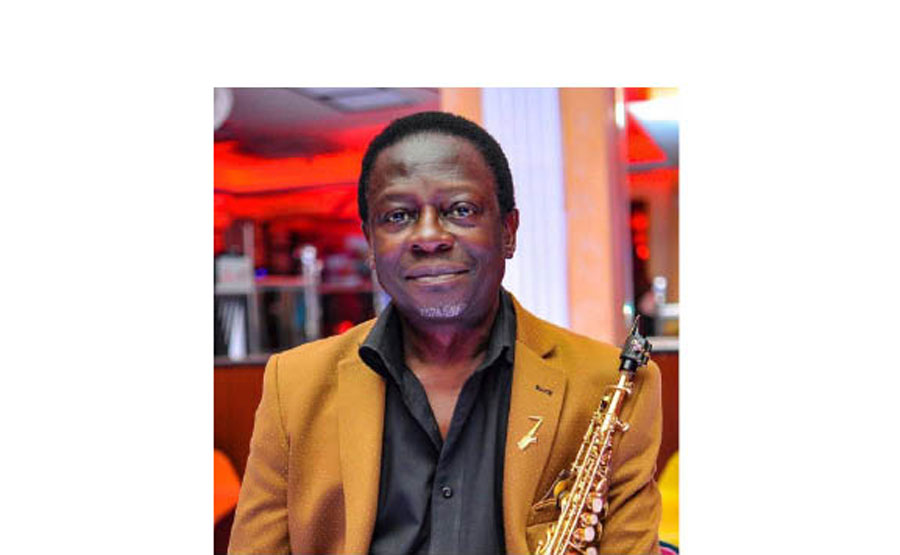
The story of the Ugandan live band music industry is incomplete
without mentioning the passion, resilience, commitment, influence and
contribution of Moses Matovu – the multitalented artiste who has graced
the stage for almost five decades, leading the country’s top band;
Afrigo.
The soft-spoken gentleman of a dark skin complexion standing
at five feet tall is a historian of the Ugandan band music industry.
He is a widower and has 11 children and grandchildren.
Matovu
was born on June 19, 1949 to the late Abdallah Bukenya bin Adam and
Solome Nakitto in Kawempe, Kampala. He spent most of his childhood with
his mother.
He began singing as chorister in the Namirembe Cathedral Choir at the age of four.
He attended Namirembe Primary School and Kibuli Secondary School for his Junior One and Junior Two.
He began his professional music career with the Thunderbirds Band in 1967 as a vocalist.
He later joined the Police Band in 1968 and Cranes Band in 1969. Internal squabbles led to the disintegration of the Cranes Band in 1975.
On August 31, 1975, Matovu, Tony Ssenkebejje, Jef Sewava, Charles Ssekyanzi and Jessy Gitta formed Afrigo Band in Kampala.
The band’s material is heavily influenced by Congolese rumba and borrows from Ugandan traditional rhythms and folk music.
The band that sings in local languages and Kiswahili, but mainly in Luganda, has since released 23 albums that include Afrigo Batuuse I, Jim, Genda Osome, Vincent, Mp’Eddembe, The Best of Afrigo, Julie, Afrigo Batuuse II” (Volume 8), Omutanda Gyali and Katonda Tumusinzenga.
Their great hits include Afrigo Batuuse I and II, Emmere
Esiridde, Mundeke, Speed, Twali Twagalana, Amazzi Genyama, Jim, Rose
Guma, Nnemeddwa, Mp’Eddembe, Obangaina, Vincent, Olumbe Lwo’bwaavu,
Olimujja Wa, Bwosika Ekitajja, Nantongo, Omusujja, Nkoye, Bwenkanya,
Suzana, Zalwango, Nfunda N’omubi, Obangaina, Minzani and Maria, among
others.
Matovu has composed hits such as Nantongo, Silina
Anantwaala, Teri Mubi, Emiziro, Ekkizi Ekadde, Sofia, Genda Osome and
Afrigo Batuuse 1, among others.
Afrigo Band launched its 23rd album titled Teri Mubi at Hotel Africana in Kampala on October 11.
They
played their old material and all the 11 songs like Teri Mubi, Hamu
jambo, Emiziro, Gira Oyige, Kitokota, Olulimi lwanga and Yantamiiza,
among others.
Matovu says Teri Mubi has new and old songs like Emiziro that he composed and recorded with the Cranes Band in 1970.
“By
then I was young and musically I did not have much of what I have
today. So I just wanted to re-arrange that song and bring it to other
people who did not know it. If I did not tell you that I recorded it in
1970 you might say it is new. But it is new in such a way that we
arranged the instrumental side of it with tempo, percussion, singing and
saxophone blowing and keys, because originally we had no saxophones,
pianos, and drums. We just used maracas and congas in 1970,” he tells
Sunday Monitor.
The message in Teri Mubi composed by Matovu is the fact that one cannot say that a woman is bad looking or ugly.
The same woman you may say is ugly is beautiful for another man.
Afrigo Band worked with Vincent Othieno, who plays bass and guitars, to produce Teri Mubi.
Advertisement
Jose Chameleone features on Teri Mubi. Eddie Ganja, Joe Koda and John Bashengezi play additional guitars.
The drums are by Olaula Ajibade while Vohn Higgibotham does the keyboards.
Othieno
is a Ugandan based in the USA. He recorded Afrigo’s album ‘Music Parade
Vol. 8’ in 1982 and has since worked with the band producing several of
their albums.
He has also worked with the Ugandan group Mixed Talents.
Matovu
describes Othieno as a very good producer. “He is a good musician, he
can play bass and guitar, he is a good arranger, and he has a good ear,
knowledgeable and experienced.”
Teri Mubi is available on Tidal
and other streaming platforms. A CD is going for Shs30,000 ($8.14) at
the band’s studio in Kampala.
It took the band four years preparing
Teri Mubi. As to what it takes to produce this kind of work, Matovu,
said: “It depends on what you want. As an old musician I don’t rush with
my things. You know music is very funny. When you finish to record
something and it’s being played you might think that it is the best. But
when you give it time and maybe come back tomorrow you can hear some
mistakes. You feel there is something missing but it depends on your
experience, what you know and want.”
When asked what he would have
been if he was not in music today, Matovu, a singer-songwriter,
saxophonist, flutist and bandleader, said: “Actually I don’t know
because I started music when I was very young. I started music when I
was 18 years.”
“I think I take it as my first job and this is the
only work I am doing. Music is part of my life – every time I am
listening to music, thinking about music and admiring good musicians,”
he added.
On how he got interest in music, Matovu said: “My mother’s
relatives are Christians and my dad was a Muslim. Most of my childhood I
stayed with my mum and her family in Bakuli in Kampala and I went to
church. I was in Namirembe Cathedral Choir when I was in Namirembe
Primary School. My mum and her family were good singers, so maybe I
picked the interest and talent of singing from there.”
As to what it
has been like leading Uganda’s legendary Afrigo Band since its formation
44 years ago, Matovu, says: “Actually I am used to that because it is
like a football team when you are used to winning you have to work for
it. It does not just come like that you have to work for it. And it is
hard work.”