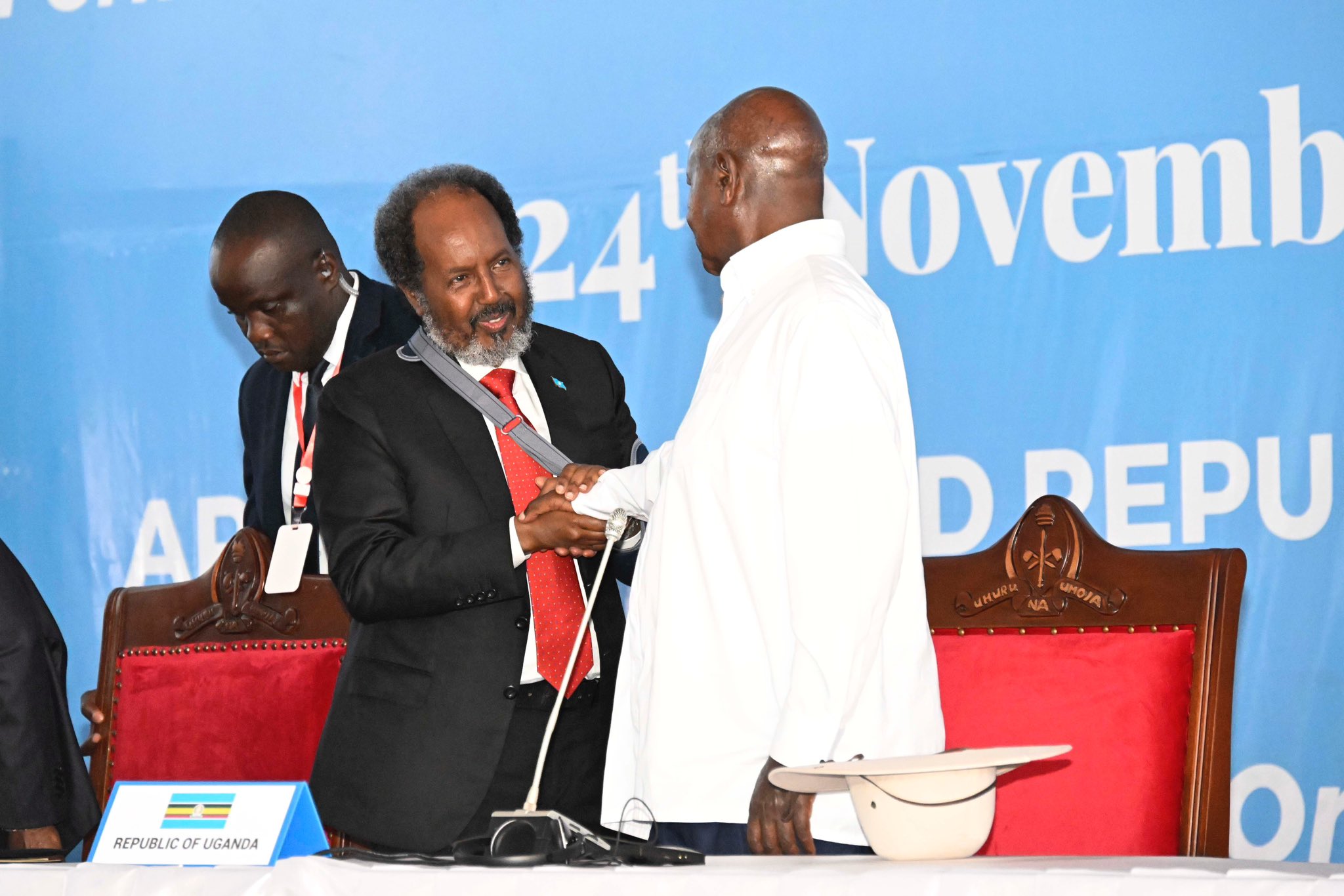
The inclusion of Somalia into the East African Community (EAC) marks a significant shift, placing the bloc at the forefront of addressing the nation’s intricate security challenges. With Somalia’s admission, the EAC assumes the responsibility of managing the country’s dynamic security landscape, aiming to counter the evolving threats prevalent in the region.
Experts speaking to The EastAfrican highlighted Somalia’s integration into the EAC, citing concerns about security vulnerabilities such as the persistent Al Shabaab terrorism, arms proliferation, and potential security risks along Somalia’s extensive shoreline – Africa’s longest – which could pose new challenges for neighboring regions.
“A similar scenario unfolded in the DRC, despite facing various challenges,” remarked a regional security expert from Uganda. “The EAC now holds a similar mandate in Somalia, and this doesn’t require UN endorsement.”
Troop-contributing countries like Uganda, Kenya, and Burundi have been actively engaged in Somalia as part of the African Union Transition Mission in Somalia (Atmis) since 2007, combatting the Al-Shabaab insurgency.
As the Atmis mandate nears its conclusion in December 2024, leaders from these contributing countries convened in Uganda in April, pledging continued support for Somalia’s stability beyond the UN mandate. They indicated potential bilateral or regional deployment in Somalia if it joins a regional security agreement.
“The responsibility now shifts to individual countries to support Somalia through bilateral or alternative arrangements,” elucidated Dismas Nkunda, a regional security analyst knowledgeable in African conflict dynamics.
The EAC’s Peace and Security Strategy, initiated in 2006, aims to guide member states in addressing security challenges, fostering a stable environment to promote development and cohesion within the region.
Analysts speculate that dwindling international interest and resources for Somalia’s prolonged instability might prompt the UN to withdraw support for the AU mission. This could necessitate sustained presence by frontier states’ armies or key actors like Uganda and Burundi to uphold Somalia’s stability.
The stability of Somalia holds significance in curbing terrorism and arms proliferation that threaten various regions within the EAC, including Wajir in Kenya, Uganda’s Karamoja sub-region, and South Sudan.
Having previously rejected Somalia’s entry due to governance and security concerns, the EAC now aims to address these issues as Somalia becomes part of the bloc, marking a new chapter in regional security and stability.
Would you like to get published on this website? You can now email the Uganda Times with an opinion, any breaking news, exposures, story ideas, human interest, articles, or any interesting videos: [email protected]. Or join the Uganda Times WhatsApp Group or Telegram Channel for the latest updates