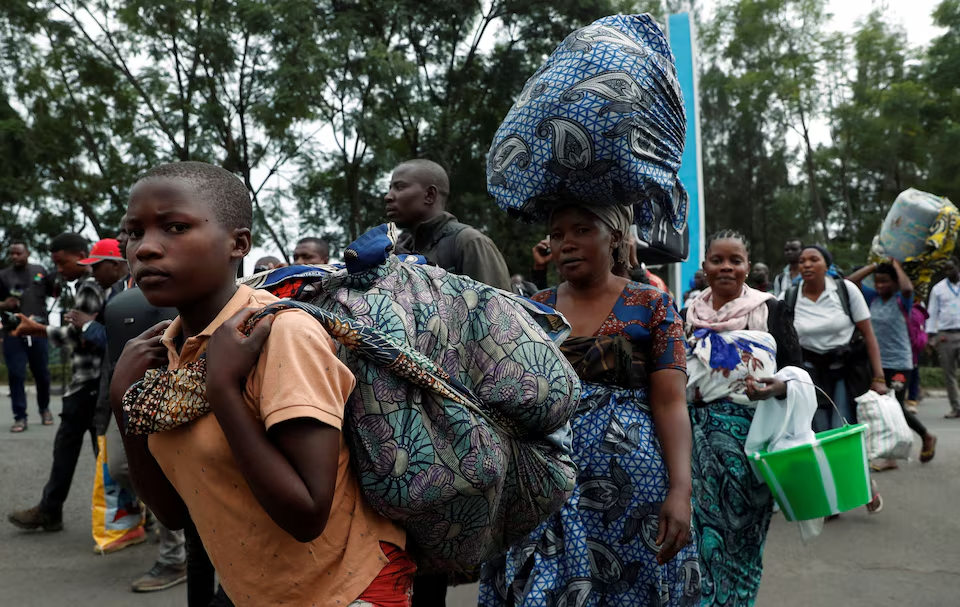
The Congo military budget strain is intensifying as war in the eastern region drains state resources. With M23 rebels occupying much of the borderlands, the Congolese government is struggling to balance military spending and falling tax revenues.
According to the International Monetary Fund (IMF), the conflict has forced the closure of tax offices in rebel-held areas. At the same time, security costs have surged. These two factors are stretching public finances to the limit.
President Felix Tshisekedi’s cabinet approved a revised wartime budget on Friday. Parliament will now debate and vote on the proposal. The updated budget reduces spending slightly to $17.2 billion. It also projects tax revenue at just 12.5% of GDP—down from the earlier estimate of 15.1%.
In March, the government announced a pay rise for soldiers and police. Their salaries were doubled to improve morale. That decision will cost around $500 million this year, according to military and government insiders.
Between January and April 2025, security-related spending exceeded $1 billion. A general told Reuters that most of this money went toward arms procurement. However, frontline troops still report shortages of food, ammunition, and basic gear.
A senior finance ministry official said the bulk of these funds operate outside the formal budget. “We don’t have full visibility either,” he noted. His statement reflects long-standing concerns about financial transparency in Congo’s military spending.
Army operations also face internal challenges. A recent Senate report revealed that Congo’s army lists 268,602 personnel, yet only 74,000 serve in combat zones. Over 36,000 troops are inactive, including 3,618 retired soldiers who await $145 million in unpaid benefits.
Meanwhile, eastern Congo remains under rebel control. This mineral-rich region contains valuable deposits of gold, tin, and coltan. IMF representative Rene Tapsoba said losing these areas could reduce tax revenue by 4%.
To adjust, the government has cut spending in other ministries. It also reduced salaries for top public officials. Although this helped shift funds to the military, it hasn’t solved the core issues—namely poor resource tracking and mismanagement.
Despite higher military spending, logistical gaps persist. Soldiers on the ground lack essential supplies, even as the budget increases. Many critics argue that poor distribution and oversight—not lack of money—are the real problem.
Regional tensions also continue to rise. The United Nations and Western powers accuse Rwanda of backing the M23 rebels. Rwanda denies these claims, stating its forces acted in self-defense. It blames Congo’s army and genocidal militias for provoking the conflict.
Congo now faces pressure on two fronts. Domestically, it must improve how it manages military funds. Regionally, it must regain lost territory while maintaining fiscal control. Unless reforms follow the budget, the Congo military budget strain will likely deepen further.