All Voters to Face Biometric Verification in Uganda’s next elections if Parliament passes proposed amendments to the Electoral Commission Act. This move will make biometric verification a legal requirement for all voters at polling stations.
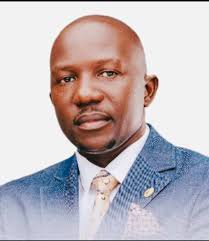
Justice and Constitutional Affairs Minister Norbert Mao introduced the proposal to eliminate common election malpractices such as ballot stuffing, ghost voting, and multiple voting. He emphasized that although the current law allows technology in elections, it doesn’t mandate its use. That loophole, according to Mao, has enabled manipulation.
While attending the groundbreaking of the new Electoral Commission (EC) headquarters in Kampala on July 30, Mao confirmed that a seven-member Cabinet committee, led by ICT Minister Dr. Chris Baryomunsi, is reviewing the proposal. Once completed, the committee will report its findings to Cabinet.
The proposal seeks to amend Section 12(1) of the law. Under this revision, biometric verification becomes mandatory rather than optional. Mao added that election officials who fail to detect discrepancies between machine records and physical ballots may face prison sentences of up to five years.
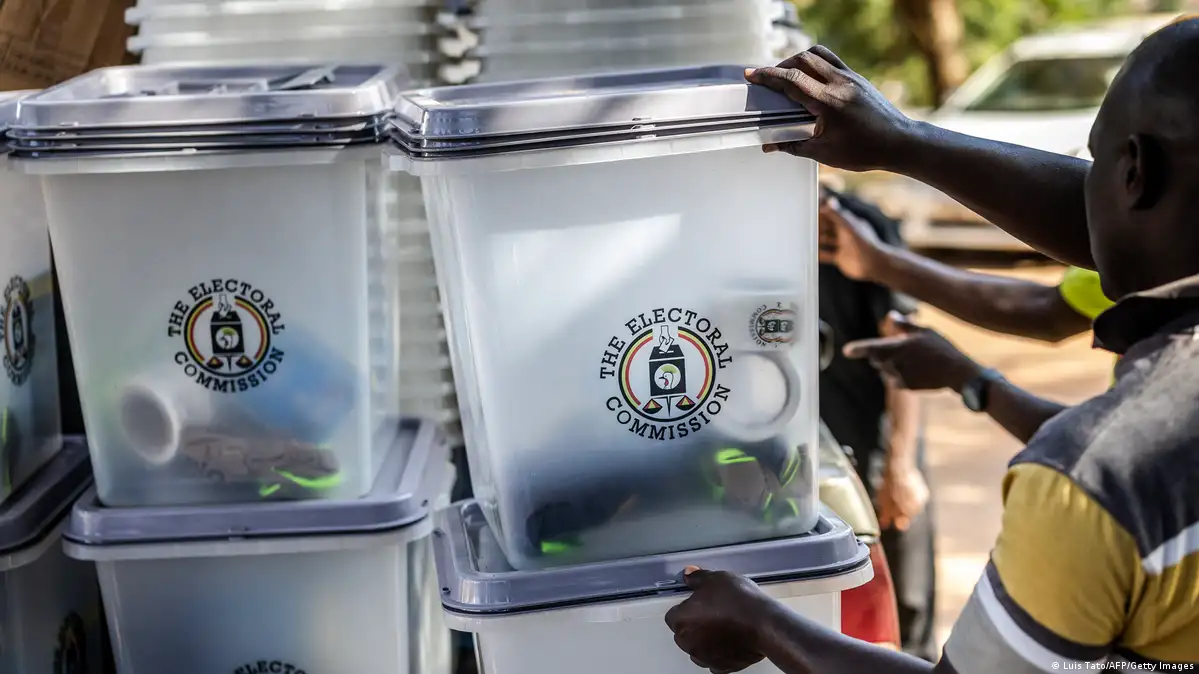
To support the reforms, the government committed $70 million (about Shs256 billion) to acquire 70,000 biometric machines. The EC plans to deploy two machines per polling station. This redundancy ensures that voting continues even if one device malfunctions.
Justice Simon Byabakama, EC chairperson, noted that this plan will cover more than 35,000 polling stations across the country. “Once the law takes effect, no one will vote unless they complete biometric verification,” he stated.
The biometric focus comes amid President Museveni’s repeated claims—though unsubstantiated—that the National Unity Platform (NUP) rigged the 2021 elections. Museveni insisted NUP stole up to one million votes, despite official results showing him with 6.01 million votes to Kyagulanyi’s 3.6 million.
Although Museveni won nationally, he suffered major losses in the central region. Kyagulanyi outpolled him by over 614,000 votes there. The NRM party also lost 10 parliamentary seats, including that of former Vice President Edward Ssekandi and several high-profile ministers.
Defeated ministers included Judith Nabakooba, Vincent Ssempijja, John Chrysostom Muyingo, Beti Kamya, Nakiwala Kiyingi, and Haruna Kasolo. These losses cemented NUP’s role as the largest opposition party, with 57 MPs.
Museveni revisited biometric voting during several public appearances. In March 2025, after NUP’s Elias Nalukoola defeated NRM’s Faridah Nambi in the Kawempe North by-election, he ordered a criminal investigation into the entire process.
Later in May, while addressing a crusade at Kololo where First Lady Janet Museveni officiated, the President argued that voting must stop at any polling station where biometric machines fail.
Justice Byabakama confirmed that the EC has already secured nearly all necessary funds for the equipment. He reassured citizens that procurement is on track. “We won’t rely on outdated devices,” he said. “We’re buying brand new biometric machines because technology keeps evolving.”
He added that elections cannot be postponed, as they are anchored in law. Therefore, the EC is moving swiftly to ensure all logistics align with the electoral timeline.
Once enacted, the new law will change Uganda’s voting system permanently. Voters must complete digital fingerprint scans before casting a ballot. Officials who attempt to bypass or ignore machine verification will face strict legal consequences.
Through these changes, the government hopes to restore public trust in elections and reinforce accountability. With biometric verification as the standard, the EC aims to deliver a cleaner, fairer electoral process in 2026 and beyond.
Read: Mukula, Oboth Clash as NRM Internal Elections Turn Ugly